Private Lung Cancer Treatment Pathways: From Diagnosis to Therapy
A lung cancer pathway is a sequence of steps, each of which needs the one before it. Seeing the whole sequence in advance helps patients and families understand what is happening and why, whether the care is delivered through the NHS or privately.
The pathway at a glance
The usual sequence starts with a suspicion, often from a chest X-ray, a symptom such as a persistent cough, or an incidental finding. A referral follows, then imaging and tissue sampling to confirm a diagnosis. Staging scans show how far the disease has spread, and a team recommends treatment based on the type of cancer, its stage, and the person's general health.
After treatment comes follow-up, with scans and clinic visits to check for recurrence and manage side effects. Throughout, patients are entitled to ask questions and to take part in decisions.
For those choosing a private route, the page on private lung cancer treatment in London from Dr James Wilson's practice describes the offer as same-day or next-day consultations, plain-English explanations of diagnosis, stage and options, and fast access to scans and tests. It also lists his training at Oxford, the Royal Marsden Hospital and Massachusetts General Hospital, and his earlier work as a consultant at UCLH.
Diagnosis and staging
Diagnosis starts with a CT scan of the chest and upper abdomen. If a suspicious area is seen, the next steps may include a PET-CT scan, which shows metabolic activity in tissue, and a biopsy taken by bronchoscopy, a needle through the chest wall or sampling of a lymph node. The tissue shows whether the cancer is non-small cell or small cell lung cancer, and tests on the sample can look for genetic changes that guide drug choices.
Staging describes the size of the tumour, whether lymph nodes are involved and whether the disease has spread. A brain scan or MRI may be added. Accurate staging matters because treatment options change sharply from one stage to the next.
Private pathways can shorten the time between steps, as the practice states in describing fast access to scans. Even so, tests need to be done in the right order and read by specialists who know the clinical question.
How the decision is made
Good lung cancer care relies on teamwork. The National Institute for Health and Care Excellence sets out the expectation in its quality standard on treatment with curative intent, which says that decisions about treatment options should be taken at multidisciplinary team meetings that include all specialist core members, and that adults with lung cancer should be involved in deciding which treatment or combination best suits them.
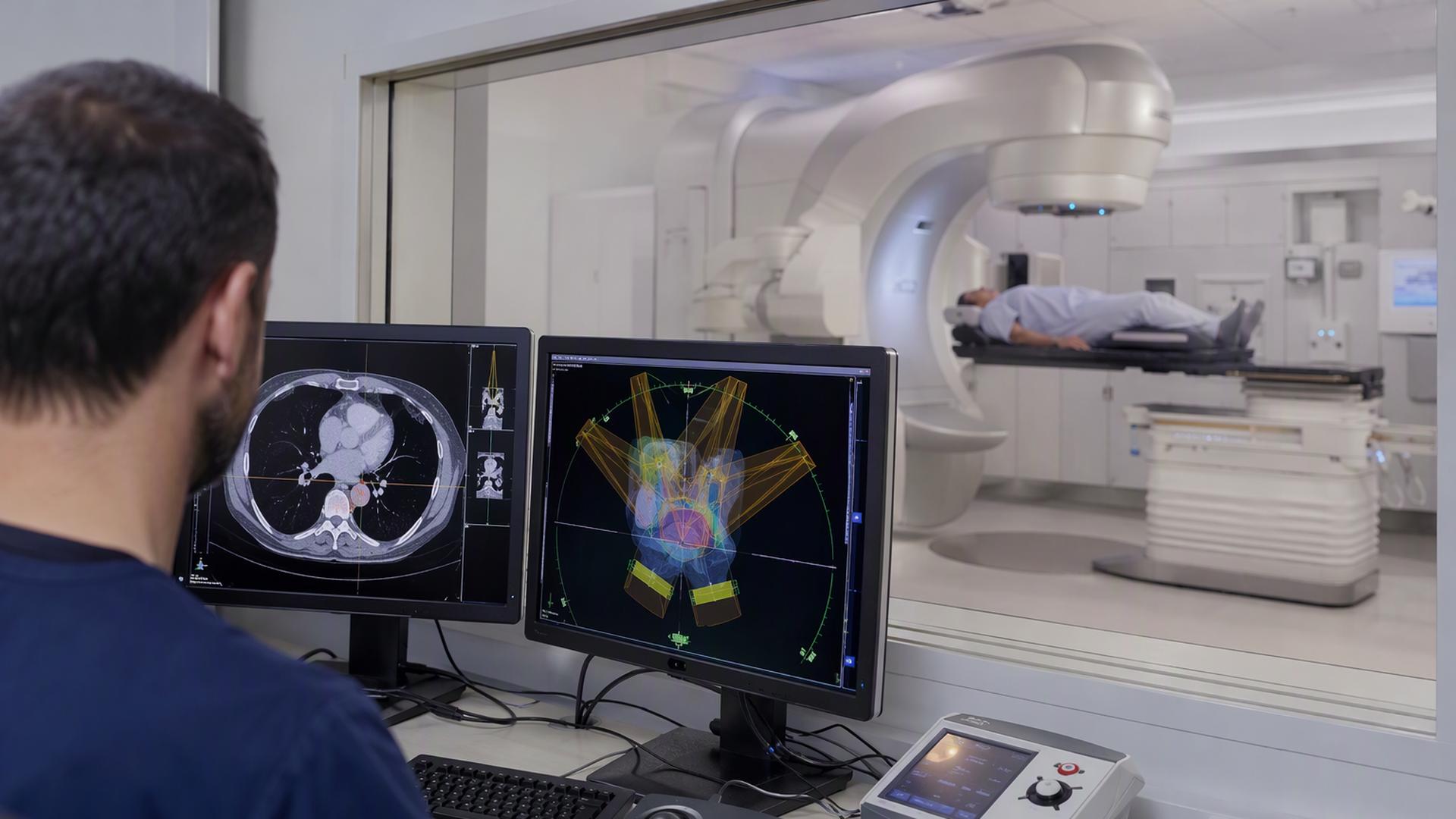
The standard describes treatment with curative intent as including radiotherapy, which can be stereotactic ablative radiotherapy, conventional or hyperfractionated radiotherapy, as well as chemoradiotherapy and multimodality treatment combining surgery, radiotherapy and chemotherapy. It states that there are a variety of options for people with early-stage non-small cell lung cancer who are well enough.
Patients can ask any private or NHS consultant whether their case will be discussed at a team meeting, who attends and how the recommendation will be communicated.
The same principle applies to private care. A consultant working alone in an independent hospital can still arrange for scans and pathology to be reviewed by colleagues and can present a case to a team meeting, sometimes at an NHS hospital where the consultant also works. Ask how this happens in practice, and ask for the team's conclusions in writing so that you can show them to any other doctor you consult.
Treatment routes by stage and type
For early-stage non-small cell lung cancer, surgery to remove part of the lung is a standard option for people who are fit enough. Stereotactic radiotherapy, which delivers high doses in a few sessions, is an alternative for some people who cannot or choose not to have surgery. Dr Wilson's practice describes experience with stereotactic techniques and proton beam therapy through partner facilities.
For locally advanced disease, treatment often combines chemotherapy and radiotherapy, sometimes followed by immunotherapy. For advanced non-small cell cancer, drug treatment, including targeted therapy for specific genetic changes and immunotherapy, usually forms the core, with radiotherapy used for symptoms or for limited areas of spread.
Small cell lung cancer is treated mainly with chemotherapy, often combined with radiotherapy when the disease is limited to the chest. Each plan depends on the individual. Ask your consultant why the plan fits your stage, and what the main alternatives would have been.
Follow-up and living with treatment
Treatment is not the end of the pathway. Patients typically have scans and appointments at intervals, and the team watches for side effects, such as breathlessness, fatigue or changes in swallowing, that may appear months later. Support with stopping smoking, pulmonary rehabilitation and nutrition forms part of good care.
People moving between NHS and private care should make sure records follow them. Ask for copies of scans and letters, and confirm who is responsible for follow-up, so that no one assumes someone else is arranging the next scan.
Plan for the practical side of recovery. Pulmonary rehabilitation, breathing exercises, nutritional advice and support with anxiety or low mood all help people through and after treatment. Cancer charities offer helplines and local groups, and a clinical nurse specialist can point to services nearby. Tell the team about new symptoms promptly rather than waiting for the next scheduled appointment, because early action often makes problems easier to manage.


